How Long Does a Metal Barndominium Last?
 Share to X

 11 min read




Table of Contents
Every Metal America building comes with a workmanship warranty and factory warranties on the panels and framing. Warranty terms depend on your region.
Metal barndominiums eliminate wood rot, termite damage, and fire risk through 12-gauge galvanized steel construction. The steel frame cannot absorb moisture, so it will never develop the soft spots and structural failures that plague wood buildings after 15 to 25 years. While your neighbor is tearing out rotted rim joists for the second time, your metal barndominium will still be standing solid with nothing more than a fresh coat of paint on a few scratches.
I have seen too many wood buildings fall apart. The base plates rot first, then the rim joists, then the sheathing. Homeowners spend thousands fixing problems that metal construction prevents entirely. This is not about one material being slightly better than another. This is about choosing a building that will outlast you instead of one that starts decaying the day you move in.
Why Metal Construction Matters for Longevity
Metal construction prevents the three main causes of structural failure in residential buildings. Galvanized steel resists rust through a zinc coating that protects the metal for decades, even in humid climates where wood rots in under 20 years.
The galvanization process coats steel with a layer of zinc that sacrifices itself to corrosion before the underlying metal can rust. Wood has no equivalent defense against moisture. Once water penetrates the lumber, rot fungi begin breaking down the cellulose structure. You cannot paint or seal wood enough to stop this process permanently.
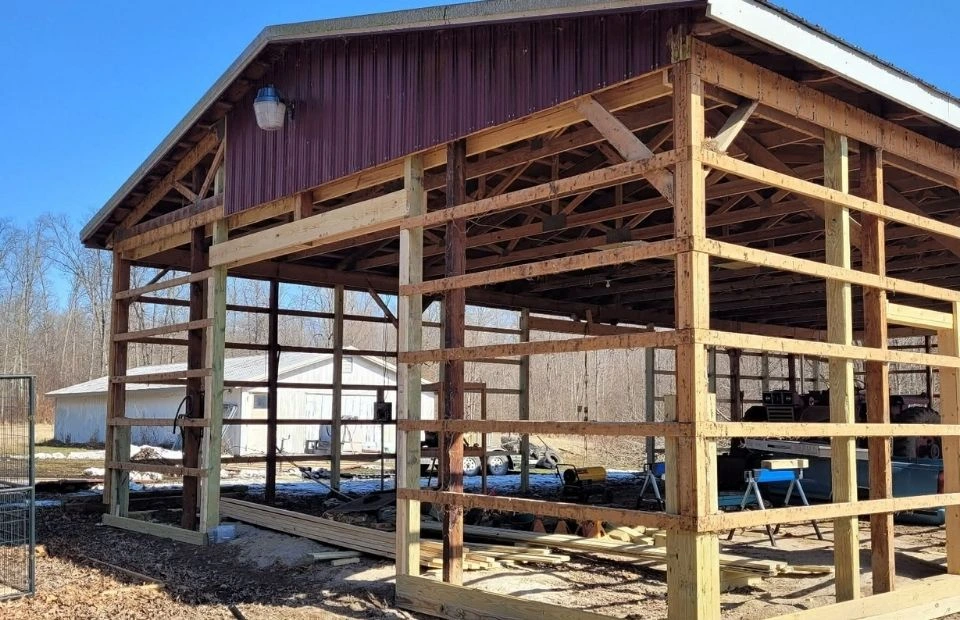
In humid Southern states, untreated wood framing typically requires major repairs within 15 to 25 years. The areas touching concrete foundations rot first because moisture wicks up from the ground. Metal base rails bolt to the same concrete with no absorption whatsoever. The steel stays dry, and the structure stays sound.
The Rot Problem with Wood Structures
Wood rot starts when moisture content exceeds 20 percent and temperatures stay above 40 degrees Fahrenheit. These conditions exist across most of the United States for significant portions of the year. The rot fungi eat away at the wood’s structural integrity until beams and joists can no longer support loads. Homeowners often discover the problem only after floors start sagging or walls begin to pull away from foundations.
The cost of rot repairs ranges from $5,000 to $12,000 for typical projects [1]. Extensive damage involving multiple joists, sill plates, and exterior sheathing can push costs above $20,000. These repairs require jacking up the structure, removing rotted wood, treating remaining timber, and installing new lumber. The work is invasive, expensive, and guaranteed to happen again in 15 to 20 years.
High-risk areas include any wood touching concrete foundations, rim joists at floor edges, and exterior sheathing behind siding. Contractors call these “failure points” because they fail predictably. Sill plate replacement alone costs $100 to $120 per linear foot [1]. For a 40-foot by 60-foot building, you are looking at $20,000 to $24,000 just to replace the bottom timber.
Signs of wood rot homeowners face
- Soft or spongy wood near foundation contact points
- Brown or black discoloration spreading through structural members
- White or gray fungal growth on exposed lumber
- Visible sagging in floors or ceilings
- Wood that crumbles when prodded with a screwdriver
These problems do not exist in metal barndominiums. The steel does not absorb water, so fungus cannot grow. The structure stays square and solid.
Termites Cannot Eat Steel
Termites cause $5 billion in property damage annually in the United States [2]. These insects consume wood 24 hours a day, hollowing out structural members from the inside. Homeowners typically discover infestations after significant damage has occurred. The average repair bill runs $3,000 per home, and some cases exceed $10,000 when foundation timbers are compromised [2].
Metal buildings eliminate termite risk entirely. The insects cannot consume steel or galvanized metal. You will never pay for termite inspections, preventive treatments, or damage repairs. Over 20 years of homeownership, this advantage saves thousands of dollars.
Wood homeowners pay $300 to $800 annually for termite monitoring and treatment [2]. They also face unpredictable repair costs when inspections find active infestations. Insurance rarely covers termite damage because companies classify it as preventable through proper maintenance. Metal barndominium owners skip all of this hassle and expense.
20-Year Pest Control Costs (Wood vs Metal)
| Category | Wood Building | Metal Building |
|---|---|---|
| Annual inspections | $6,000 ($300/year) | $0 |
| Preventive treatments | $4,000 ($200/year) | $0 |
| Damage repairs (average) | $6,000 (2 incidents) | $0 |
| Total 20-year cost | $16,000 | $0 |
The money you save on pest control alone pays for a significant portion of your metal building premium over wood construction.
Fire Resistance and Insurance Benefits
Steel is non-combustible and holds a Class A fire rating from building code authorities. The metal will not ignite, spread flames, or contribute fuel to fires. This property protects your home and can reduce insurance premiums by significant amounts depending on your location and insurer.
Insurance companies offer premium reductions ranging from 30 to 50 percent for steel-framed buildings compared to wood construction [3]. The exact discount depends on your area’s fire risk, but most homeowners see meaningful savings. Over 30 years of homeownership, reduced insurance premiums can total $15,000 to $30,000 or more.
In wildfire-prone areas, steel construction provides critical protection. Wood homes in California, Texas, and other fire-risk states face soaring insurance costs or policy cancellations. Unlike traditional barn homes, metal barndominiums do not burn. Insurers recognize this advantage and price policies accordingly.
The steel frame itself will not melt in typical building fires. Steel melts at approximately 2,700 degrees Fahrenheit, while structure fires rarely exceed 1,800 degrees [3]. Your metal barndominium can suffer interior damage in a fire, but the frame stays intact. This means faster recovery and lower total loss claims.
How Much Maintenance Does a Metal Barndominium Need?
Maintenance requirements separate metal from wood more than any other factor. Wood buildings demand constant attention. You must restain or repaint siding every 5 to 10 years. You treat for termites annually. You inspect and repair rot damage in vulnerable areas. These tasks never end.
Metal barndominiums need touch-up paint on scratches and annual roof screw inspections. That is the complete maintenance list for most homeowners. The exterior panels do not rot, so you never replace siding. The steel does not provide food for insects, so you skip pest treatments.
Consider what wood homeowners face. Exterior painting costs $3,000 to $6,000 every 7 to 10 years. Termite treatments cost $300 to $800 annually. Rot repairs hit every 15 to 25 years at $5,000 to $20,000 per incident.
Metal barndominiums require a $200 touch-up paint kit every few years and an hour of your time checking roof screws annually. The low-maintenance benefits mean you spend weekends enjoying your property instead of maintaining it.
The Metal Building Specifications That Matter
Not all metal buildings offer the same durability. The gauge of steel, thickness of panels, and quality of galvanization determine how long your barndominium will last. You need 12-gauge steel framing for habitable structures. Lighter 14-gauge steel works for carports and storage buildings but lacks the strength for residential use.
Panel thickness matters for weather resistance and longevity. Standard metal barndominiums use 26-gauge panels. These provide adequate strength while keeping weight manageable. Thinner 29-gauge panels work for carports but dent more easily and may not meet residential building codes in your area.
The galvanization coating protects steel from rust. Quality steel suppliers apply zinc coatings thick enough to last decades. Cheaper buildings use thinner coatings that wear through faster. Ask about the galvanization specification and warranty coverage before ordering any metal building.
For complete specifications on metal barndominium construction, see our complete barndominium guide. That resource covers frame specifications, panel choices, and engineering requirements in detail.
Weather Performance
Metal barndominiums handle severe weather better than wood construction. Metal America’s standard building is rated for 140 mph winds and 25 PSF snow loads. Where your build site requires more, it can be upgraded up to 170 mph and 90 PSF. Your county’s code sets the minimum for your address. The bolted connections and steel framing distribute wind loads across the entire structure instead of concentrating stress at individual studs.
Engineers calculate the required strength based on historical snowfall data for your area. The steel trusses span wider distances than wood without sagging. Vertical roof panels shed snow and water more effectively than traditional shingles.
I have seen metal buildings sit through hurricanes that flattened wood homes in the same neighborhood. The steel does not snap like lumber. It bends under extreme stress and returns to shape when loads decrease. This flexibility keeps the structure intact during weather events that destroy rigid wood framing.
FAQ
Q: How long does a metal barndominium last?
A: Every Metal America building comes with a workmanship warranty and factory warranties on the panels and framing. Warranty terms depend on your region.
Q: Do metal barndominiums rust?
A: Galvanized 12-gauge steel resists corrosion when properly maintained with occasional touch-up paint.
Q: Are metal barndominiums termite-proof?
A: Yes. Steel construction is completely termite-proof as insects cannot consume metal, eliminating annual inspection and treatment costs.
Q: How much maintenance does a metal barndominium need?
A: Metal barndominiums need annual roof screw checks and occasional touch-up paint on scratches, requiring 90 percent less maintenance than wood structures.
Q: Do metal buildings perform well in storms?
A: Metal barndominiums withstand 140 mph winds and heavy snow loads, outperforming wood construction in hurricanes, tornadoes, and severe weather.
Q: Can I get insurance discounts with a metal barndominium?
A: Yes. Insurance companies offer premium reductions of 30 to 50 percent for steel-framed buildings due to their fire resistance and durability.
Conclusion
Metal outlasts wood by decades. Wood construction might seem familiar and traditional, but familiarity does not equal durability. Steel provides superior protection against rot, termites, and fire while requiring almost no maintenance.
The math is straightforward. You skip termite treatments, rot repairs, and constant repainting. The building stands solid while wood structures around it decay and require expensive renovations.
If you want a home that lasts, build with steel. That is the kind of durability that makes sense.
References
[1] Fence Armor. (2025). Understanding Wood Rot Repair Costs: A Comprehensive Guide. Retrieved from https://fencearmor.com/blogs/news/understanding-wood-rot-repair-costs-a-comprehensive-guide
[2] Orkin. (2022). Termite Damage Statistics & Costs. Retrieved from https://www.orkin.com/pests/termites/termite-statistics
[3] BuildSteel.org. (2025). Insurance Costs Are Re-Shaping Construction Choices — And the Data Speaks for Itself. Retrieved from https://buildsteel.org/technical/fire/insurance-costs-are-re-shaping-construction-choices-and-the-data-speaks-for-itself/