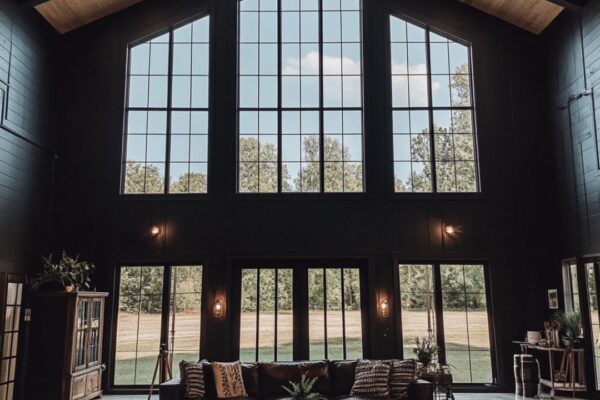
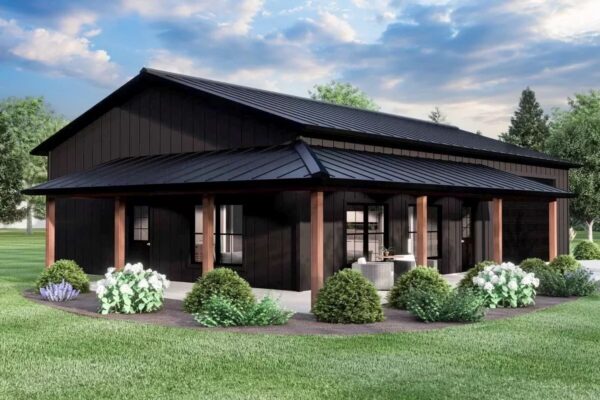
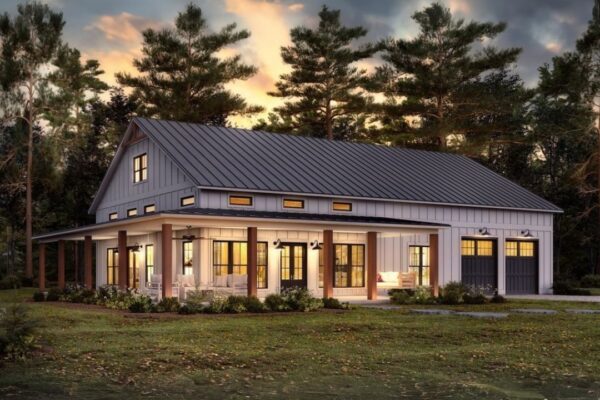
Barn Homes vs Barndominiums
 Share to X

 13 min read




Table of Contents
Barn homes and barndominiums can look identical from the outside, but barn homes use wood framing while barndominiums use 12-gauge steel frames, creating massive differences in durability, maintenance, and total cost of ownership. Many folks search for barn homes because they want that rustic aesthetic and open floor plan. The truth is, you can achieve any barn look you want with either construction method. The real question is whether you want to build with wood that requires constant maintenance or steel that sits there doing its job for 50 years without complaining.
What You’re Actually Comparing
The key difference between barn homes and barndominiums is construction method, not appearance. Barn homes use traditional stick-built framing with dimensional lumber or timber frame construction. These structures rely on wooden 2x4s, 2x6s, or large timber posts to support the building. Barndominiums use 12-gauge galvanized steel framing with 26-gauge metal panels. The steel frame is engineered to handle specific wind and snow loads for your location.
You can make a barndominium look exactly like a traditional barn home. Board-and-batten metal siding looks like wood siding from 20 feet away. Interior finishes use the same materials whether you have wood or steel framing. The aesthetic difference is zero if you want it that way.
| Factor | Barn Home | Barndominium |
|---|---|---|
| Primary structure | Wood dimensional lumber or timber | 12-gauge galvanized steel tube |
| Framing material | 2×4, 2×6, or heavy timber posts | Square tubing spaced 4 feet on center |
| Exterior options | Wood siding, metal panels, stone veneer | Metal panels, wood siding, stone veneer |
| Interior options | Drywall, wood paneling, any finish | Drywall, wood paneling, any finish |
| Construction method | Stick-built or timber frame | Engineered metal building |
| Lifespan expectation | 40-60 years with maintenance | 50-100 years minimal maintenance |
People often search for barn homes when they really want barndominium designs with rustic aesthetics. The confusion makes sense because marketing uses these terms interchangeably sometimes. A barn home traditionally means wooden construction. A barndominium uses metal building technology finished to look however you want.
The Wood vs Steel Durability Battle
Wood deteriorates over time while steel maintains its strength for decades. This is not opinion, it is how materials behave in the real world. Wood frames face constant threats from moisture, insects, temperature changes, and time itself. Galvanized steel with proper coating handles all these factors without breaking a sweat.
Wood framing has specific vulnerabilities that require ongoing attention:
- Rot from moisture exposure through leaks or condensation
- Termite and carpenter ant damage destroying structural integrity
- Warping and twisting as wood dries and settles
- Settling and structural movement creating cracks
- Fire risk since wood is combustible
- Regular treatment and sealing to prevent decay
Steel framing advantages eliminate most maintenance concerns:
- Galvanized rust protection backed by 20-year warranty
- Termite-proof material that insects cannot eat
- No warping, twisting, or settling over time
- Fire-resistant non-combustible construction
- Minimal maintenance beyond touching up scratched paint
- 50 to 100 year lifespan typical with proper installation
The 12-gauge steel used in barndominiums comes with a 20-year rust-through warranty. The galvanized coating protects the metal from corrosion. Since termites cannot eat steel, you eliminate a threat that costs American homeowners billions annually. Wood requires regular inspections, treatments, and eventual replacement of damaged sections. Steel just keeps holding up your house year after year.
Construction Timeline Comparison
Barn homes take 12 to 18 months to complete using traditional stick-framing methods. Barndominiums finish in 9 to 12 months on average, with metal shell installation happening in days rather than weeks. The timeline difference matters when you are paying rent somewhere else or living in temporary housing during construction.
Traditional wood framing requires building each wall individually, installing roof trusses one at a time, and sheathing everything with plywood before adding exterior materials. Weather delays wood construction significantly. Rain stops work. Lumber gets wet and needs to dry out. The process stretches on.
A barndominium shell arrives as a complete engineered system. The manufacturer delivers pre-cut components that bolt together in 2 to 3 days for most residential sizes. The building is weather-tight immediately. Interior finish work proceeds on schedule without waiting for the structure to dry or settle.
| Phase | Barn Home Duration | Barndominium Duration |
|---|---|---|
| Planning and permits | 2-3 months | 2-3 months |
| Foundation | 2-3 weeks | 2-3 weeks |
| Framing and shell | 4-8 weeks | 1-2 weeks |
| Roofing | 1-2 weeks | Included in shell |
| Interior finish | 8-12 months | 6-7 months |
| Total timeline | 12-18 months | 9-12 months |
The faster timeline saves you money on construction financing. You pay interest for fewer months. You move into your home sooner and stop paying rent or mortgage on your old place. Timeline reliability matters too. Metal manufacturing has consistent lead times. Lumber prices and availability swing wildly based on market conditions.
The Total Cost Reality
Initial construction costs favor barndominiums in most comparisons. Barn homes using traditional framing cost $150 to $250 per square foot complete depending on location and finish quality. Barndominiums run $100 to $150 per square foot for similar quality finishes. The difference comes from faster installation and lower material costs for the structural system.
Wood barn construction requires more labor hours. Framing a wood structure takes weeks. Carpenters charge $40 to $100 per hour depending on your location. A traditional timber frame barn costs even more, ranging from $175 to $500 per square foot because timber requires specialized craftsmen and expensive materials.
| Size | Barn Home Total Cost (Average) | Barndominium Total Cost (Average) | Savings with Metal |
|---|---|---|---|
| 2,000 sq ft | $300,000-$500,000 | $200,000-$300,000 | $100,000-$200,000 |
| 2,400 sq ft | $360,000-$600,000 | $240,000-$360,000 | $120,000-$240,000 |
| 3,000 sq ft | $450,000-$750,000 | $300,000-$450,000 | $150,000-$300,000 |
| 4,000 sq ft | $600,000-$1,000,000 | $400,000-$600,000 | $200,000-$400,000 |
Cost breakdowns show where the savings come from:
| Component | Barn Home ($/sq ft) | Barndominium ($/sq ft) |
|---|---|---|
| Framing and structure | $40-$60 | $15-$25 |
| Foundation | $6-$14 | $6-$14 |
| Roof system | Included in framing | Included in shell |
| Exterior finish | $8-$15 | $3-$8 (panels) |
| Interior finish | $40-$90 | $40-$90 |
| Total range | $150-$250+ | $100-$150 |
These are national averages. Location affects pricing dramatically. Concrete costs $6 per square foot in rural Texas but $14 per square foot in Colorado. Labor rates vary by region. Get local quotes for accurate numbers in your area.
Maintenance Over 20 Years
Wood maintenance is ongoing and expensive throughout the life of the structure. Metal maintenance is minimal after initial construction. Calculate the 20-year ownership cost difference and the numbers get dramatic.
Barn homes require regular maintenance to prevent deterioration:
- Exterior wood treatment every 3 to 5 years for staining and sealing
- Annual termite inspections and treatment as needed
- Rot monitoring and repairs when moisture damage occurs
- Wood replacement for damaged siding and structural elements
- Repainting or refinishing exterior surfaces
- Settling and structural adjustments as wood moves
Barndominiums need very little ongoing attention. The galvanized steel resists rust. Metal panels do not rot or attract termites. Touch up scratched paint when it happens. Check roof penetrations annually. That is about it.
| Maintenance Category | Barn Home (20 years) | Barndominium (20 years) | Savings |
|---|---|---|---|
| Exterior treatment and sealing | $15,000-$30,000 | $500-$2,000 | $13,000-$28,000 |
| Pest control and treatments | $8,000-$15,000 | $0 | $8,000-$15,000 |
| Rot repairs and replacement | $10,000-$40,000 | $0 | $10,000-$40,000 |
| Structural repairs from settling | $5,000-$20,000 | $0 | $5,000-$20,000 |
| Roof maintenance | $8,000-$15,000 | $3,000-$5,000 | $5,000-$10,000 |
| Total 20-year maintenance | $46,000-$120,000 | $3,500-$7,000 | $42,500-$113,000 |
The 20-year rust warranty on barndominium frames gives you peace of mind. You are not worried about hidden rot or termite damage. You are not paying for treatments and repairs every few years. The low maintenance metal construction benefits compound over decades of ownership.
Getting the Barn Home Look with Metal Construction
You can achieve any aesthetic you want with barndominium construction. The metal frame is hidden behind whatever exterior and interior finishes you choose. Board-and-batten metal siding looks like traditional wood siding. Rustic interior finishes work exactly the same way over steel framing as they do over wood.
Ways to get barn home aesthetic with barndominium construction:
- Board-and-batten metal panels that look like vertical wood siding
- Wood-grain finish metal siding mimicking real wood texture
- Traditional barn colors including red, white, brown, and gray
- Faux timber beams inside for decorative rustic character
- Rustic interior finishes like wood floors and shiplap walls
- Traditional barn-style doors and hardware for authentic look
The appearance difference between a well-finished barndominium and a barn home is essentially zero. Visitors cannot tell which construction method you used unless you show them the framing. The steel structure is completely hidden behind drywall and exterior panels.
| Design Element | Barn Home (Wood) | Barndominium (Metal) | Appearance Difference |
|---|---|---|---|
| Exterior siding | Wood or metal | Metal or wood | None with right materials |
| Interior beams | Structural timber | Decorative wood over steel | None visually |
| Overall look | Traditional barn | Traditional barn | None if designed same |
| Maintenance needs | High ongoing | Minimal ongoing | Significant difference |
You get the best of both worlds. The barn aesthetic appeals to you and fits your property. The metal durability protects your investment and saves maintenance costs. There is no reason to sacrifice performance for appearance when you can have both.
Weather Performance and Longevity
Metal buildings handle extreme weather better than wood construction across every category. The 12-gauge steel frame in barndominiums is rated for 140 mph winds standard. Buildings engineered for your location handle local snow loads ranging from 25 to 35 PSF typically. Wood frames struggle in the same conditions that metal frames handle easily.
Hurricane and tornado performance shows the difference clearly. Wood framing snaps and splinters under extreme wind loads. Metal frames bend but typically do not fail catastrophically. The building might take damage but the structure holds together better than stick-built construction.
Metal building weather advantages:
- 140 mph wind ratings standard for most builds
- Snow load capacity 25 to 35 PSF typical depending on engineering
- Hurricane and tornado resistant engineered construction
- No moisture absorption preventing rot regardless of humidity
- Performs equally well in all climates from desert to coastal
Wood buildings in humid Southern climates face constant moisture threats. Coastal areas add salt air that accelerates wood deterioration. The best-built wood barn requires more maintenance in difficult climates than the same structure would need in dry regions. Metal performance stays consistent regardless of weather conditions.
Resale Value and Market Acceptance
Both barn homes and barndominiums can have good resale value if properly finished. Quality matters more than construction type for most buyers. A well-built barndominium appeals to younger buyers who appreciate low maintenance. A beautiful timber frame barn home attracts buyers willing to handle upkeep. Location affects acceptance levels significantly.
Resale considerations for both types:
- Proper finishing critical for strong resale value on both types
- Barndominiums appeal to younger buyers seeking modern efficiency
- Lower maintenance attractive to retirees downsizing from larger homes
- Location affects acceptance levels with rural areas more familiar
- Quality matters more than construction type for educated buyers
Market acceptance for barndominiums has grown substantially. Ten years ago buyers questioned the concept. Now barndominiums sell quickly in most markets. The combination of open space, workshop potential, and modern living areas creates strong buyer interest. Some luxury barndominium builds command premium prices over comparable traditional homes.
When to Choose Barn Home vs Barndominium
Traditional barn homes make sense for specific buyers with specific priorities. Most people choose based on practical considerations like cost, durability, and maintenance rather than requiring authentic timber construction. The decision framework helps clarify which option fits your situation.
Choose traditional barn home if you:
- Must have authentic timber frame construction for personal reasons
- Have unlimited budget for ongoing maintenance and treatments
- Value traditional building methods specifically for their own sake
- Live where barn homes command premium pricing justifying extra cost
- Do not mind 12 to 18 month construction timeline minimum
- Accept higher long-term ownership costs for aesthetic preference
Choose barndominium if you:
- Want barn aesthetic without wood maintenance requirements
- Prefer 50 year plus durability with minimal upkeep
- Working with realistic budget for most homeowners
- Need 9 to 12 month construction timeline to move in sooner
- Want lowest long-term cost of ownership over decades
- Prioritize practical performance over traditional methods
For complete details on barndominium construction, costs, and specifications, see our complete barndominium guide. That resource covers the entire building process from planning through move-in.
Frequently Asked Questions
Q: Can a barndominium look exactly like a barn home?
A: Yes, barndominiums can use board-and-batten siding, traditional colors, and rustic interior finishes to achieve identical barn home aesthetics with superior metal construction underneath.
Q: Why do barndominiums cost less than barn homes?
A: Metal framing costs less than wood framing, installs faster reducing labor costs, and requires significantly less ongoing maintenance over the building’s lifetime.
Q: Which lasts longer between barn home and barndominium?
A: Barndominiums typically last 50 to 100 years with minimal maintenance while barn homes require major repairs and treatments every 5 to 10 years to maintain structural integrity.
Q: Do barn homes have better resale value than barndominiums?
A: Resale value depends more on location, quality of finishes, and current market conditions than construction type alone in most real estate markets.
Q: Can you finance both types the same way?
A: Yes, both barn homes and barndominiums use standard construction loans with similar credit requirements and down payments for qualified buyers.
Q: Which is easier to maintain long-term?
A: Barndominiums require dramatically less maintenance due to metal construction that eliminates wood rot, termite damage, and weathering issues entirely.
Q: How do insurance costs compare between the two?
A: Barndominiums often qualify for lower insurance rates due to fire resistance and superior wind ratings compared to wood frame construction.
Final Thoughts
The barn aesthetic is achievable with either construction method. You get the look you want regardless of whether you choose wood or metal framing. The practical differences show up in durability, maintenance requirements, construction timeline, and total lifetime costs.
Metal construction offers superior durability with 20-year rust warranties and 50 to 100 year lifespan expectations. Wood construction requires ongoing maintenance commitment with treatments every few years and repairs as rot or pest damage occurs. Most buyers choose barndominiums for practical reasons after seeing the numbers.
You can build beautiful barn homes with either method. The question is whether you want to spend your weekends maintaining a wood structure or enjoying your property while the metal building takes care of itself. Metal America specializes in durable barndominium construction using 12-gauge steel frames and professional installation. The practical choice is clear when you look at long-term performance.
References
[1] Angi. “How Much Does It Cost to Build a Barn?” https://www.angi.com/articles/how-much-does-building-barn-or-playhouse-cost.htm
[2] HomeGuide. “How Much Does It Cost to Build a Barn?” https://homeguide.com/costs/cost-to-build-a-barn
[3] ISG Frames. “How Long Does Steel Framing Last?” https://isgframes.com.au/steel-framing-outperforms-timber/